JEFFREY SCHIFF

  • bio
  • contact

O Sole Mio

Boston Center for the Arts  1990
wood, sheetrock, steel, rubber, casters, tape player
10′ x 13′ x 7′

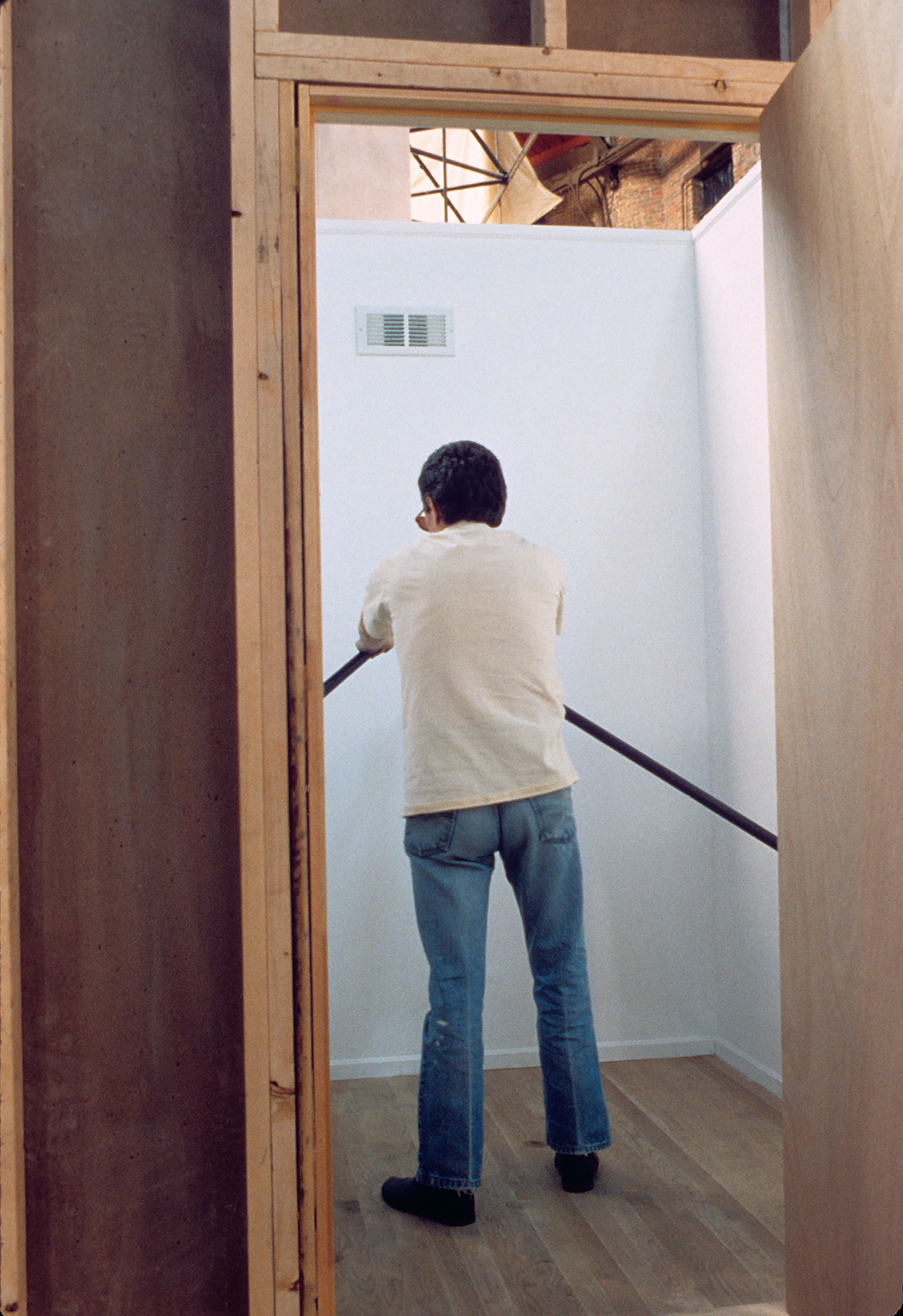
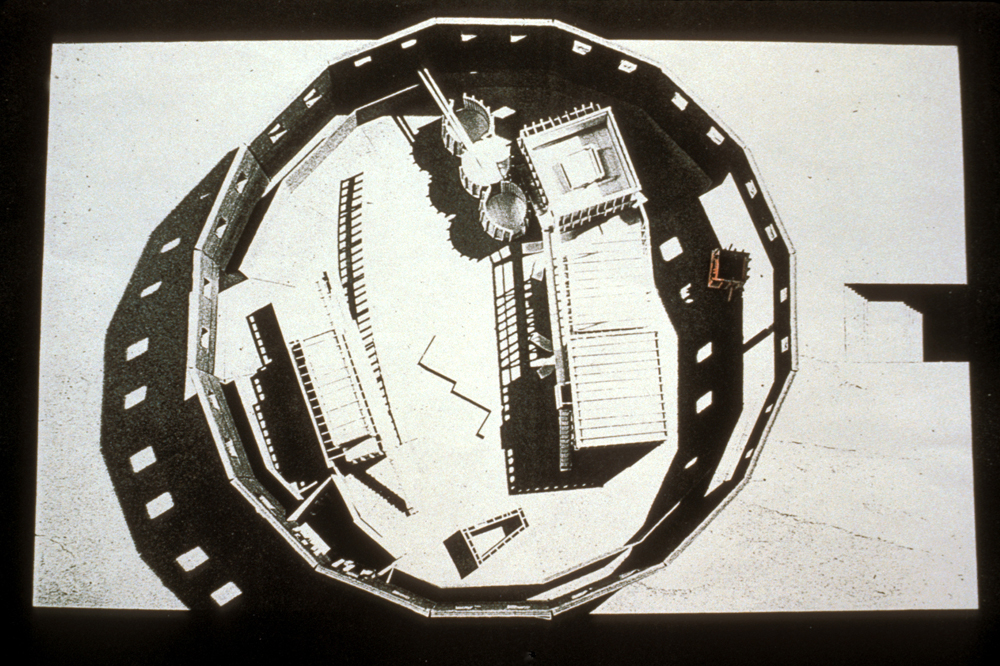
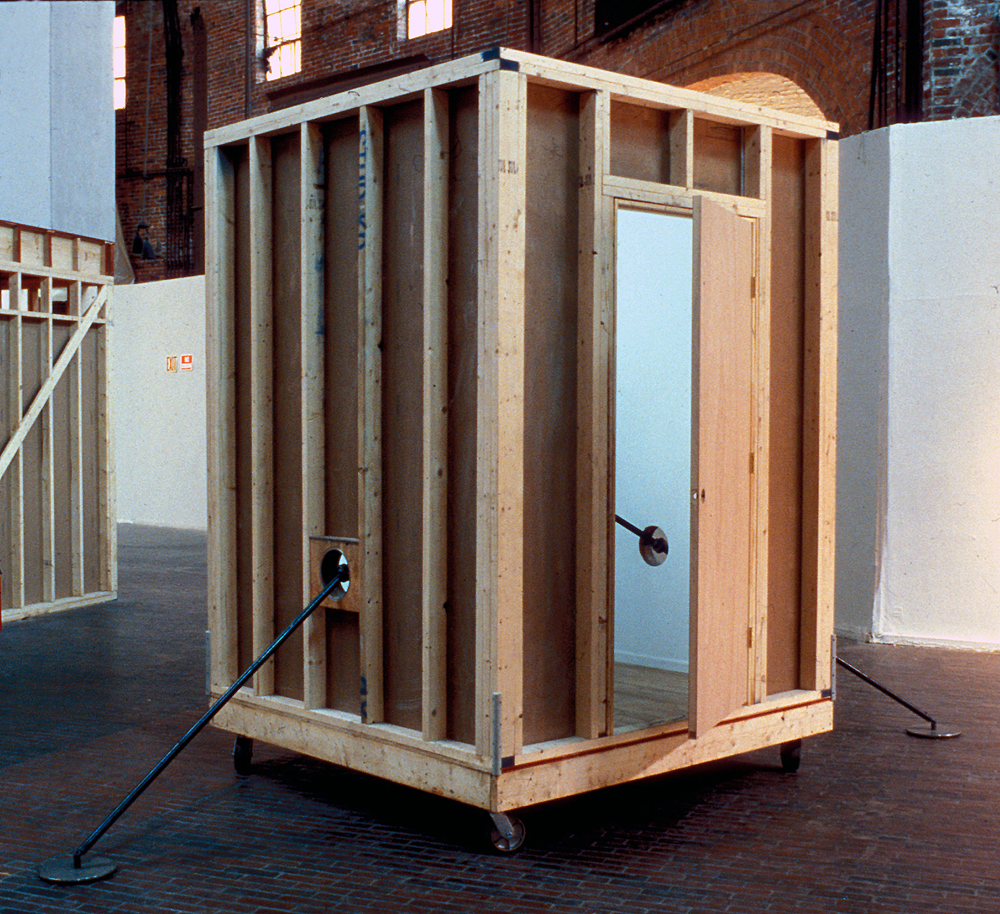
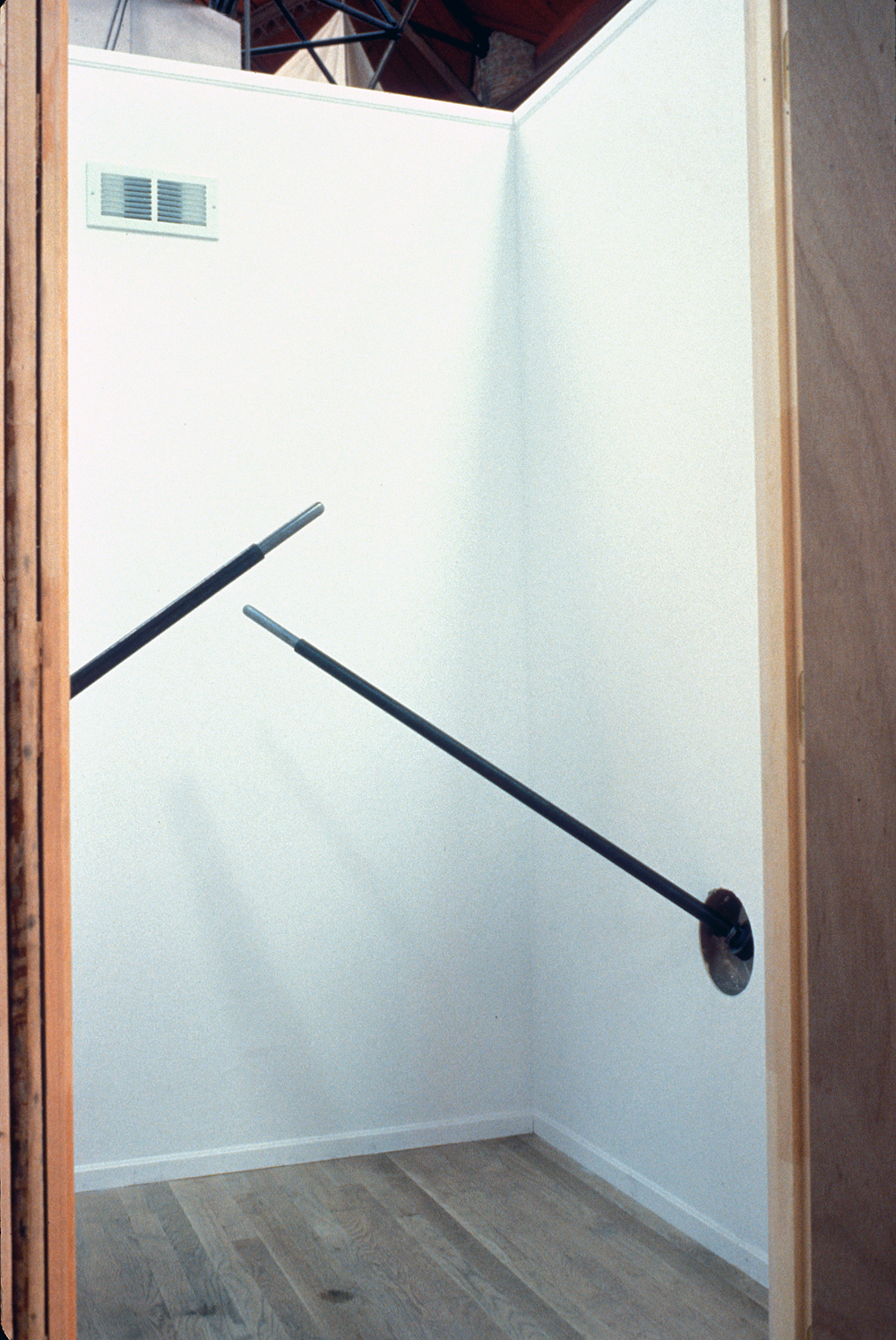
In a group exhibition in which Kennedy/Violich Architects had been commissioned to design individual spaces for artist installations, I built a movable room so that I could control my own social relations with the other artists in the exhibition. A small conventional room was built on large casters. Punting oars penetrated the sides of the room so that the occupant could push off the floor and blindly steer the room around the exhibition hall. A recording of Caruso singing O Sole Mio continuously played into the room through a vent high on the back wall.
essays and reviews


O SOLE MIO
“Installation and Place” Boston Center for the Arts 1990

I conceived of O SOLE MIO (wandering) in response to the specific terms of the exhibition: an architect was to design an architecture to house 16 individual artists’ installations. This constituted a direct reversal of my customary working procedure in which I respond sculpturally to a given architecture. I felt that I could not allow myself to be connected to a larger superstructure, particularly one I knew nothing about. It was a political question regarding the relationship of individual to commune. It seemed that the only way I could participate was as an independent structure, unfixed in location and relationship to the whole – within the exhibition structure but now quite of it. My installation, rather than occupying a room, would be the room itself which would wander aimlessly around the larger space of the Cyclorama. The piece reflects the condition of the artist – the job and melancholy of being alone.

Behold the brilliant sun in all its splendor, Forgotten is the storm, the clouds now vanish, The fresh’ning breezes, heavy airs will banish, Behold the brilliant sun in all its splendor!
A sun I know of that’s brighter yet, This sun, my dearest, ’tis naught but thee, The face, so fair to see, That shall now my sun forever be.

Behold the radiant sun mid evening shadows, With golden light it covers all creation, Until it sinks below the world’s foundation. Behold the radiant sun mid evening shadows.

A sun I know that’s brighter yet, This sun, my dearest, ’tis naught but thee, Thy face, so fair to see, That shall now my sun forever be.

Eduardo Di Capua


Related Posts
Double Vision: Propositon #14 
(64"x49"x24")
Double Vision: Transactions of the American Philosophical Society
Zilkha Gallery, Wesleyan University  2011Double Vision is a 5-part project that exposes how unconscious projections from America’s colonial origins shape perceptions of its current reality. In 1786, one year before the ...
READ MORE
Masterpiece
The Library Project: Masterpiece
digital print mounted on sintra and aluminum, 13 panels each 32" x 40" Masterpiece is a set of thirteen large digital prints of pages from the dictionary, in which highlighted words form ...
READ MORE
Second Mesa
Second Mesa
Set for Douglas Dunn and Dancers Institute of Contemporary Art, Boston  1983 A collaboration with choreographer Douglas Dunn and composer John Driscoll, this commission from the I.C.A. encompassed the entire two floors ...
READ MORE
The Library Project: Number
bound book, 500 pages 9" x 12" x 2" Number is a book that shows the calculated number of books in the imaginary library described in Jorge Luis Borges' story "The Library ...
READ MORE
Double Vision: Propositions
flame-worked glass, steel, rubber, oil, water, lab tableChemistry lab-ware separating oil from water mounted on lab tables.
READ MORE
Networks
Networks
1992-3 oilstick on paper notecards variable The Network drawings are mappings of an intuitive passage from one self-created place to another, the formation of relationships out of nothing. They are intentionally structural and ...
READ MORE
Selections
Selections
2013-14 digital print, flashe paint Digital photographs of contingent objects "selected" with white paint.
READ MORE
A Courtyard, an Axis, an Ambulatory
Stux Gallery, Boston MA  1982 cast plaster Based on Heidegger's famous analogy of the bridge, the barely suggested characteristics of courtyard, axis, and ambulatory already present in the gallery are completed with ...
READ MORE
Double Vision: Text photographs
Double Vision: Text Photographs
digital photographs mounted on sintra approx. 50"x 40" each Enlarged photographic prints of three narratives from the published Transactions of the American Philosophical Society: Two Hearts found in one Partridge; Account of ...
READ MORE
Casting Blocks
Casting Blocks
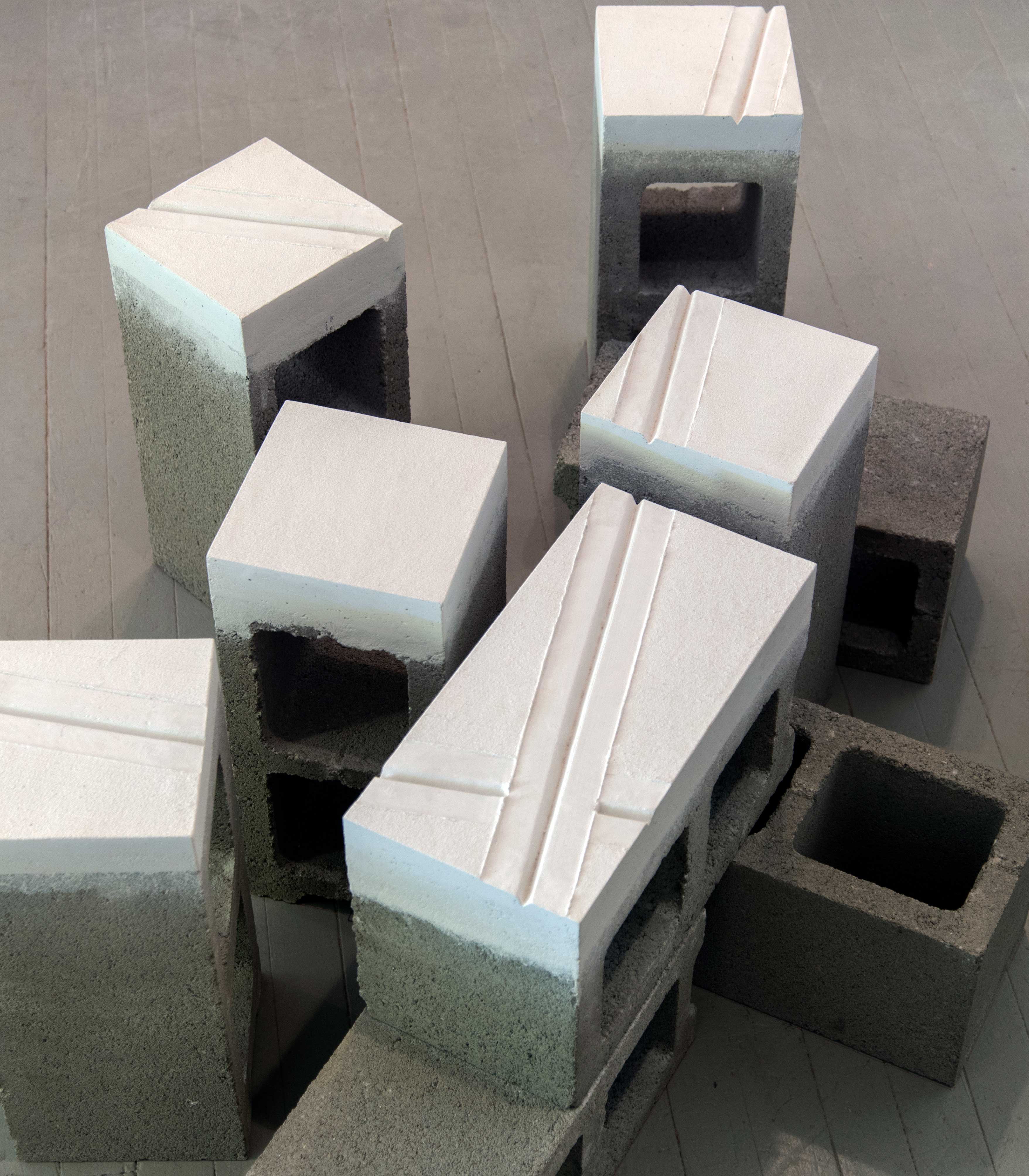
2014 cast hydrocal
READ MORE
Double Vision: Transactions of the American Philosophical Society
The Library Project: Masterpiece
Second Mesa
The Library Project: Number
Double Vision: Propositions
Networks
Selections
A Courtyard, an Axis, an Ambulatory
Double Vision: Text Photographs
Casting Blocks

  • Installations
    • Double Vision: Transactions of the American Philosophical SocietyDouble Vision: Transactions of the American Philosophical Society
    • The Library ProjectThe Library Project
    • from L’Encyclopédie: Miriotierfrom L’Encyclopédie: Miriotier
    • Mobile GlobalMobile Global
    • Vertical HoldVertical Hold
    • Potter’s FieldPotter’s Field
    • Everywhere ChidambaramEverywhere Chidambaram
    • Everyday ChidambaramEveryday Chidambaram
    • Sole ContactSole Contact
    • Earth AgainEarth Again
    • Deux Ex MachinaDeux Ex Machina
    • If Ever…If Ever…
    • Kill Van KullKill Van Kull
  • Public Commissions
    • DestinationsDestinations
    • Rail of JusticeRail of Justice
  • Sculpture
    • Carpet RubbleCarpet Rubble
    • ContingenciesContingencies
    • DisThermiaDisThermia
    • Lean-Tos and Floor-PilesLean-Tos and Floor-Piles
    • SchemataSchemata
    • EmbedsEmbeds
    • Casting BlocksCasting Blocks
    • KneelersKneelers
    • DevicesDevices
    • TransparenciesTransparencies
  • Performance
    • Praying ProjectPraying Project
    • ColossusColossus
    • Second MesaSecond Mesa
  • Interactivity
    • Sole ContactSole Contact
    • Potter’s FieldPotter’s Field
    • KneelersKneelers
    • Everywhere ChidambaramEverywhere Chidambaram
  • Photo Work
    • InterruptionsInterruptions
    • Contingencies: PhotoworksContingencies: Photoworks
    • reConstructionsreConstructions
    • from L’Encyclopédie: Miriotier Photoworksfrom L’Encyclopédie: Miriotier Photoworks
  • Drawings
    • Ink MapsInk Maps
    • Rome/Bologna DrawingsRome/Bologna Drawings
    • Bellagio Rockefeller DrawingsBellagio Rockefeller Drawings
    • The Library Project: YeastThe Library Project: Yeast
    • NetworksNetworks
    • Color MapsColor Maps
  • Archive
    • Odds and Ends
    • I.C.A. ProjectI.C.A. Project
    • W.P.A. ProjectW.P.A. Project
    • RevisionRevision
    • Second SightSecond Sight
    • A Courtyard, an Axis, an AmbulatoryA Courtyard, an Axis, an Ambulatory
    • High MesaHigh Mesa
    • New GroundNew Ground
    • Separate GroundSeparate Ground
    • O Sole MioO Sole Mio
    • If Ever…If Ever…
    • Second MesaSecond Mesa
    • PossessionsPossessions

O Sole Mio

August 28, 2014 by jschiff@wesleyan.edu

Boston Center for the Arts  1990
wood, sheetrock, steel, rubber, casters, tape player
10′ x 13′ x 7′

In a group exhibition in which Kennedy/Violich Architects had been commissioned to design individual spaces for artist installations, I built a movable room so that I could control my own social relations with the other artists in the exhibition. A small conventional room was built on large casters. Punting oars penetrated the sides of the room so that the occupant could push off the floor and blindly steer the room around the exhibition hall. A recording of Caruso singing O Sole Mio continuously played into the room through a vent high on the back wall.
essays and reviews


O SOLE MIO
“Installation and Place” Boston Center for the Arts 1990

I conceived of O SOLE MIO (wandering) in response to the specific terms of the exhibition: an architect was to design an architecture to house 16 individual artists’ installations. This constituted a direct reversal of my customary working procedure in which I respond sculpturally to a given architecture. I felt that I could not allow myself to be connected to a larger superstructure, particularly one I knew nothing about. It was a political question regarding the relationship of individual to commune. It seemed that the only way I could participate was as an independent structure, unfixed in location and relationship to the whole – within the exhibition structure but now quite of it. My installation, rather than occupying a room, would be the room itself which would wander aimlessly around the larger space of the Cyclorama. The piece reflects the condition of the artist – the job and melancholy of being alone.

Behold the brilliant sun in all its splendor, Forgotten is the storm, the clouds now vanish, The fresh’ning breezes, heavy airs will banish, Behold the brilliant sun in all its splendor!
A sun I know of that’s brighter yet, This sun, my dearest, ’tis naught but thee, The face, so fair to see, That shall now my sun forever be.

Behold the radiant sun mid evening shadows, With golden light it covers all creation, Until it sinks below the world’s foundation. Behold the radiant sun mid evening shadows.

A sun I know that’s brighter yet, This sun, my dearest, ’tis naught but thee, Thy face, so fair to see, That shall now my sun forever be.

Eduardo Di Capua


You May Also Like

Inscriptions
Embeds
Casting Blocks

Copyright © 2026 · Genesis Framework · WordPress · Log in